शोधकर्ताओं ने Monero P2P exchanges पर linkable footprints मापे

“Decentralized Monero exchanges” पर academic papers शायद ही product blogs तक पहुँचते हैं — marketing measurement से आगे निकल जाता है। arXiv:2505.02392 (Monero's Decentralized P2P Exchanges: Functionality, Adoption, and Privacy Risks, revised 2025) उपयोगी counterweight है: यह map करता है कई P2P stacks on-chain और off-chain वास्तव में क्या करते हैं, forum posts जो wish करते हैं वह नहीं।
यह post research findings only summarise करता है। Workflow choose करने के लिए Haveno vs Telegram Mini App use करें — यहाँ duplicate comparison table नहीं।
एक नज़र में
| फ़ील्ड | मान |
|---|---|
| विषय | arXiv 2505.02392 — Monero P2P DEX measurement और privacy analysis |
| प्रारूप | Research explainer — citations, routing advice नहीं |
| Paper | arXiv HTML v3 |
| उल्लिखित उत्पाद | Domestic Monero — P2P Monero ट्रेड के लिए Telegram Mini App |
| आधिकारिक एंट्री | @domestic_monero_bot |
| सपोर्ट | केवल आधिकारिक बॉट पर /support (Trade #ref + ट्रेड स्टेट शामिल करें) |
| एसेट (P2P) | XMR ↔ BTC, LTC, ETH, SOL, USDT (ERC-20) |
| यह नहीं है | Haveno setup guide; investment advice; claim कि सभी P2P equally leaky |
Paper क्या करने वाला था
Authors Monero-oriented P2P exchange platforms analyse करते हैं — functionality, adoption signals, और privacy risks — emphasis:
| Platform class | Paper में examples |
|---|---|
| Tor / desktop P2P DEX | Haveno, Bisq (Monero pairs) |
| Atomic-swap infrastructure | COMIT और related cross-chain mechanisms |
| Broader P2P context | Chat-classified और escrow-market patterns |
Goal: debate slogan (“decentralized = untraceable”) से architecture तक — on-chain क्या है, centralized helpers पर क्या rely, observers अभी भी क्या correlate कर सकते हैं।
Atomic swaps — Monero को नई math क्यों चाहिए
Bitcoin–Monero atomic swaps classic HTLC-only designs reuse नहीं कर सकते क्योंकि Monero में वह scripting model नहीं जो contracts assume करते हैं। Paper literature path summarise करता है:
| Mechanism | Role |
|---|---|
| HTLC-style swaps | Scriptable chains पर common — Monero के लिए limited |
| Adaptor signatures / DLEQ-class proofs | Monero script hooks के बिना cross-chain swaps enable |
| COMIT-style stacks | Different UX tradeoffs के साथ trust-minimised BTC↔XMR paths |
Readers takeaway: atomic custody timing describe करता है, हर leg पर automatic opacity नहीं।
Haveno — paper क्या measure करता है
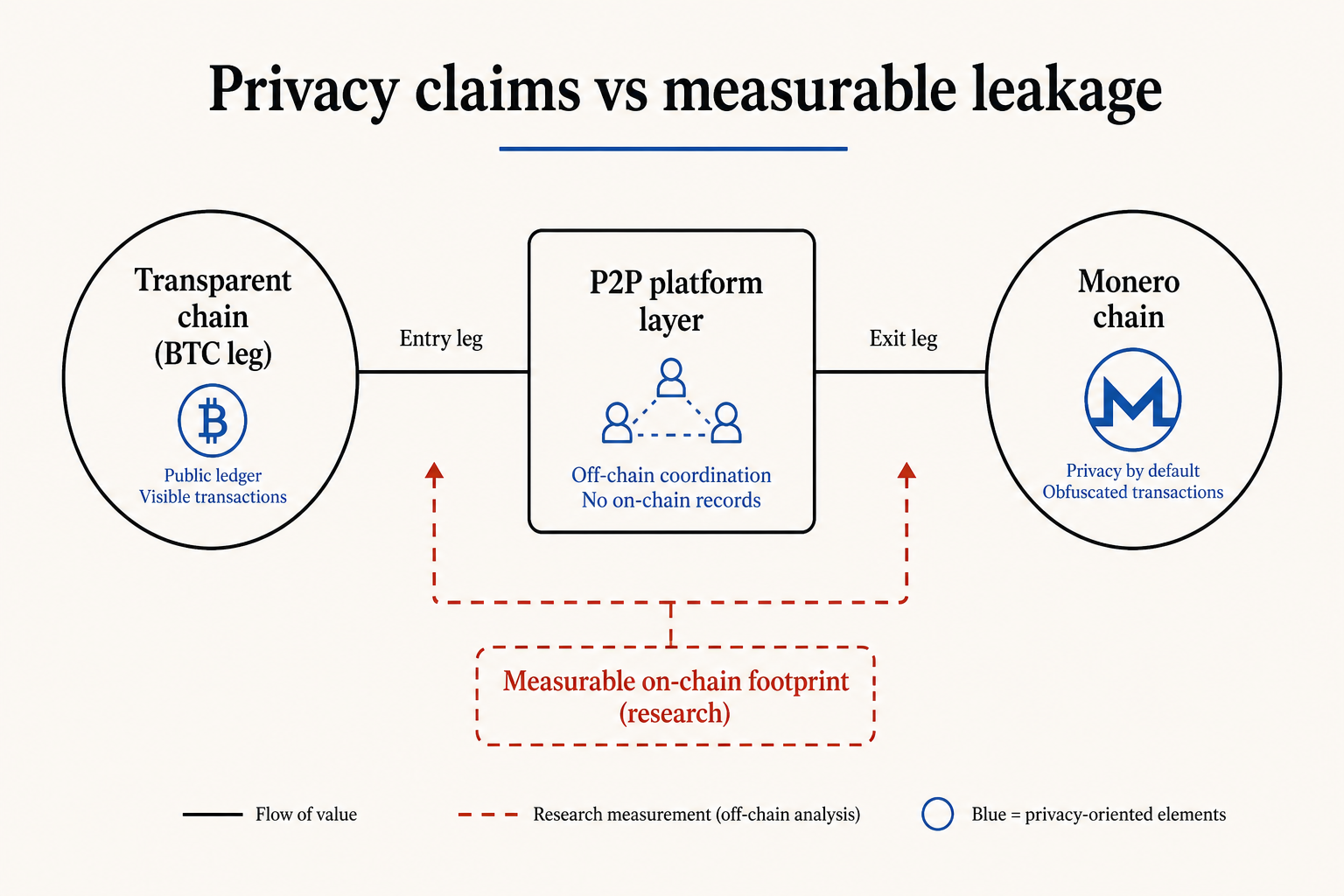
Paper report करता है Haveno trades detectable on-chain footprints छोड़ सकते हैं, some degree of cross-chain transaction linking allow — observers right vantage से Monero-side activity को transparent-chain legs से correlate कर सकते हैं marketing language से ज़्यादा।
Centralized components भी note (Haveno और Bisq में): seed nodes, arbitrators, similar infrastructure availability and governance dependencies reintroduce — fully peer-only myth से distinct।
Archive paper graphs/datasets यहाँ replicate नहीं करता। Methodology और numbers के लिए primary source पढ़ें।
COMIT — different tradeoff, different leakage model
COMIT के लिए paper contrasting profile emphasize:
| Aspect | Paper's framing |
|---|---|
| Centralized helpers | Seed-node-heavy designs versus reduced |
| UX / liquidity | Weaker — fewer hand-holding features |
| Linkability | Different failure modes — “zero risk” नहीं, Haveno footprints identical नहीं |
Useful lesson: “more decentralized wiring” ≠ “easier for retail” — P2P landscape multi-axis है।
Paper क्या prove नहीं करता
| Non-sequitur | Correction |
|---|---|
| “Haveno is useless” | Paper measurable risks identify, user verdicts नहीं |
| “Telegram P2P is safer” | This paper does not study Domestic Monero — conclusions import न करें |
| “Monero privacy is broken” | Paper specific P2P constructions discuss, Monero base layer wholesale नहीं |
| “Use CEX instead” | Centralised venues KYC, delisting, reporting carry — different perimeter (delisting routes) |
Research use करें slogan parrot बने बिना
- Ask what is being measured — on-chain footprint vs IP vs counterparty identity vs escrow design।
- Separate base-layer privacy from platform privacy — Monero defaults how you enter/exit से differ (1099-DA broker edge)।
- Treat Tor, fresh addresses, counterparty hygiene as practice — papers user ops absolve rarely।
- Pick tools by workflow limits समझने के बाद — link out: LocalMonero alternatives, Haveno vs Telegram Mini App।
Domestic Monero public model: Telegram Mini App, staged Offers / Trades, Multisig Trade Wallet (public wording — claim नहीं), 6 confirmations, trade share। Mobile peer conversion optimize — Tor-native Haveno या CLI atomic swaps से different design point।
इस लेख में शब्द
| शब्द | यहाँ अर्थ |
|---|---|
| P2P DEX | Peer exchange software — CEX order book नहीं |
| On-chain footprint | Chains/trades across linkable observable artifacts |
| HTLC | Hash time-locked contract — scriptable chains पर common |
| Adaptor signature | Monero पर classic HTLC के बिना swaps enable cryptographic tool |
| COMIT | Paper में referenced cross-chain atomic-swap project |
| Seed node | Peers discover infrastructure — centralisation pressure |
FAQ
कौन सा paper?
arXiv:2505.02392v3 — HTML: arxiv.org/html/2505.02392v3।
क्या यह Domestic Monero study करता है?
नहीं। Haveno/Bisq/COMIT-class systems के लिए paper cite करें।
Footprints की वजह से Haveno बंद करूँ?
Archive choices prescribe नहीं। Measured linking vs threat model समझें; Haveno vs Telegram Mini App में workflows compare।
Atomic swaps हमेशा P2P escrow से private?
Automatically नहीं — transparent-chain legs और user behaviour matter। Swap custody risks: privacy-tax trap।
Telegram पर peer XMR trade कहाँ start?
Official entry only: @domestic_monero_bot। Verify: Verify official channels।
अगले कदम
- Datasets के लिए primary paper पढ़ें — यह post map है, replacement नहीं।
- Buyer's guide posts से workflow choose करें, research summary से नहीं।
- Trading से पहले official bot verify।
Marketing site: domesticmonero.com.
Related: Haveno vs Telegram Mini App · LocalMonero alternatives · BTC/USDT → XMR without exchange